

Surface treatment industries such as pickling, galvanizing and electroplating depend on chemicals to prepare and protect metal. That work comes at a cost: highly contaminated wastewater carrying acids, heavy metals and other hazardous by-products.
Left untreated, this effluent damages the environment, puts workers at risk and exposes the business to penalties under pollution control norms. An Effluent Treatment Plant (ETP system) is the first line of defense in a compliant wastewater treatment strategy, and the tanks that feed and support it decide how well it performs.
What Is an Effluent Treatment Plant (ETP System)?
An Effluent Treatment Plant (ETP) is a specialized system that treats wastewater from chemical-intensive processes like pickling, galvanizing and electroplating. It removes suspended solids, heavy metals, toxic chemicals and acidic compounds so the water can be discharged safely or reused.
In practice, the ETP is the central unit of a facility’s wastewater infrastructure. Whether it is handling acidic rinse water or sludge-heavy discharge, its job is to bring every drop of effluent within permissible environmental limits.
How an ETP Works in a Pickling or Galvanizing Plant
Pickling and galvanizing effluent behaves differently from municipal or food-industry wastewater. It is largely inorganic, carrying spent acid, dissolved iron, zinc and rinse water with a very low pH. That shapes every stage of the treatment train.
- Equalization: Spent liquor and rinse water collect in a buffer tank. This evens out swings in flow and acidity so the dosing downstream stays predictable. A corrosion-resistant process tank does this job.
- Neutralization: Lime, caustic soda or soda ash raises the pH to the range where dissolved metals form solid hydroxides. This happens in reaction tanks built to handle corrosive effluent.
- Coagulation and flocculation: Chemical dosing binds fine metal particles into larger flocs that can settle. The reagents behind it sit in chemical storage tanks, where leak-proof PP, FRP or HDPE construction keeps dosing safe and consistent.
- Clarification: The flocs settle in a clarifier, leaving clear water above and sludge below. Settling tanks must resist both wear and chemical attack.
- Sludge dewatering: A filter press or similar unit reduces sludge volume, which directly cuts disposal cost. Sludge holding tanks feed this stage and buffer the load.
- Polishing: Filtration and a final pH check prepare the water for discharge within CPCB and SPCB limits, or for reuse in rinsing.
Biological treatment is added only when the plant also produces organic load, for example from degreasing lines. Every stage above depends on tanks and piping that can survive acid and chlorides day after day. PP, FRP and HDPE are the standard materials because they resist the chemicals and do not rust through, and the benefits of polypropylene pickling tanks are especially clear where hot acid is involved.
Why Pickling and Galvanizing Plants Need an ETP
Pickling, galvanizing and electroplating generate large volumes of effluent full of acids, metal ions and chemical residues. Without proper treatment, that wastewater can contaminate local ecosystems, corrode infrastructure and expose workers to health risks. This applies equally to zinc coating lines, where pickling, rinsing and effluent handling work best when planned together, as our turnkey hot-dip galvanizing plant guide explains.
An ETP keeps industrial discharge within CPCB and SPCB regulations and makes it possible to recycle water, which cuts freshwater consumption. With one in place, a plant can:
- Stay compliant and avoid penalties
- Protect soil and water resources from toxic contamination
- Reuse treated water for rinsing and auxiliary operations
- Offer a safer, cleaner and more sustainable workplace
For any surface finishing facility, an ETP is a core requirement for responsible wastewater treatment.
Where Better Pickling Tanks Reduce the Load on Your ETP
An ETP can only treat what reaches it, and a lot of avoidable load starts at the pickling line. A leaking or poorly welded tank sends uncontrolled acid into drains, which pushes up neutralization chemical use and sludge volume. Getting material, sizing and weld quality right at the start is the cheapest way to take pressure off the plant downstream, and the factors to consider before buying a pickling tank walk through each one.
For management, the point is simple. Money spent on a better tank at the front of the line returns as lower chemical consumption, less sludge and fewer compliance surprises at the ETP.
Arvind Anticor’s Role: Tanks That Power ETP Efficiency
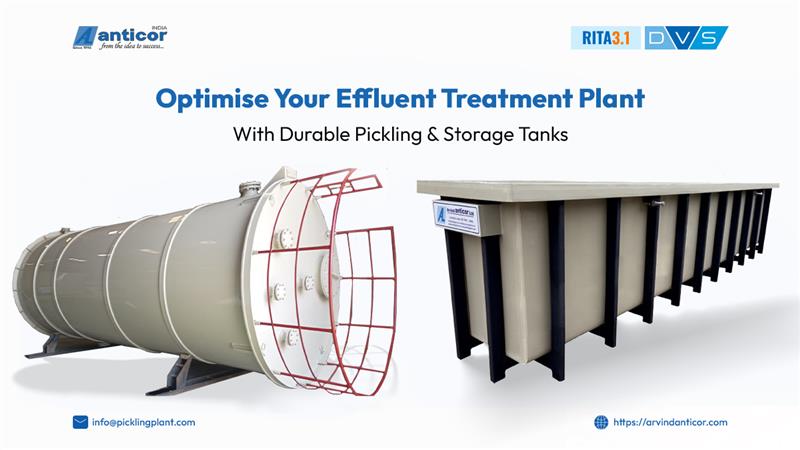
At Arvind Anticor, we support the performance and longevity of Effluent Treatment Plants across surface treatment industries. Our tanks and components are designed for the chemical and structural demands ETP systems face every day. Before specifying tanks for your ETP, it helps to compare formats and duty conditions, which our overview of pickling tank types and applications covers. We offer:
- Chemical storage tanks made from PP, FRP and HDPE
- Neutralization and reaction tanks engineered for balancing corrosive effluent
- Sludge holding and settling tanks built for long-term resistance to wear and chemical exposure
Our tanks are manufactured with DVS-compliant welding and RITA 3.1 software, which means leak-proof, corrosion-resistant construction that integrates cleanly into wastewater treatment systems. Whether the job is acid neutralization, chemical dosing or sludge collection, we provide durable infrastructure that keeps your ETP running reliably and safely.
Conclusion
An Effluent Treatment Plant (ETP system) is more than a regulatory requirement. It is the foundation of a responsible and sustainable surface treatment operation, and as environmental rules tighten, efficient wastewater treatment is no longer optional.
With Arvind Anticor‘s corrosion-resistant PP, FRP and HDPE tanks integrated into your ETP, you gain long-term reliability, safety and compliance. From acid neutralization to sludge handling, our tanks are engineered to withstand the toughest chemical environments and keep your operations running efficiently.
Let’s Connect
Contact Us
We are live 24/7 and reply within 48 hours.
Get in Touch
-
-
-
Address
Survey No.584/1+2 – C,Nr. Akshar Industrial Estate Mahemdabad Highway Road,Vatva Ahmedabad-382445, Gujarat, India.