

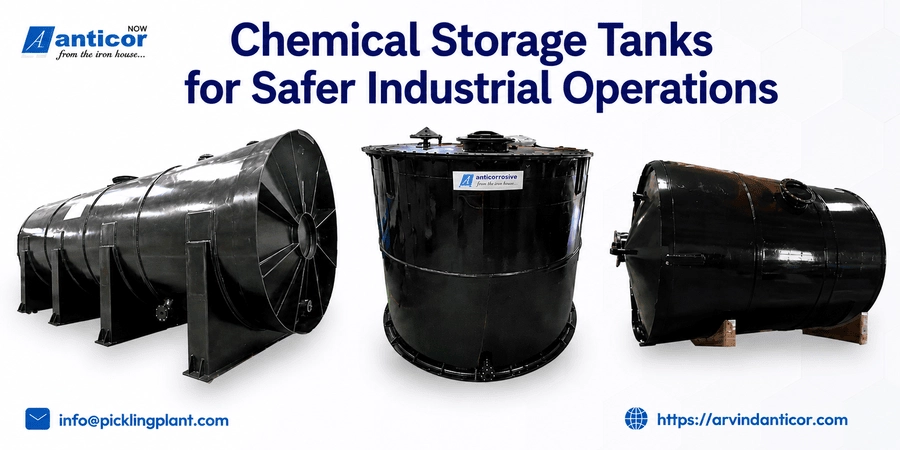
Chemical storage tanks are a critical component of industrial operations across sectors such as chemical processing, metal finishing, water treatment, manufacturing, and pharmaceuticals. These tanks are specifically designed to safely store chemicals, acids, solvents, and other hazardous substances while minimizing risks associated with handling and containment.
Improper chemical storage can lead to leaks, spills, contamination, equipment damage, and workplace accidents. As industries continue to prioritize worker safety and environmental responsibility, selecting the right chemical storage tank has become essential for maintaining safe and efficient operations.
Modern chemical storage tanks are engineered to provide secure containment, corrosion resistance, and reliable storage for a wide range of industrial chemicals. Beyond their primary storage function, they play an important role in reducing workplace hazards, supporting regulatory compliance, improving inventory management, and enhancing overall operational safety.
In this article, we explore how chemical storage tanks contribute to workplace safety and why they remain an essential investment for industries that handle hazardous chemicals.
Key Benefits of Using Chemical Storage Tanks
Cost Savings
One of the significant advantages of industrial chemical storage tanks is their ability to reduce overall storage and handling costs. By storing chemicals in bulk quantities, industries can reduce the need for multiple smaller containers, resulting in lower procurement, maintenance, and operational expenses.
With fewer storage units to monitor and maintain, personnel can manage chemical inventories more efficiently while reducing the likelihood of storage-related issues. These efficiencies allow organizations to allocate resources more effectively while maintaining safe storage practices.
Space Savings
Consolidating chemicals into standardized, prefabricated storage tanks allows facilities to streamline storage needs into a smaller footprint. Rather than storing chemicals in various containers scattered throughout a facility, purpose-built storage tanks neatly consolidate inventory.
Chemical storage tanks for industries can hold the volume of numerous drums, totes, or cylinders. This avoids the need to dedicate separate spaces for scattered storage vessels. Facilities can reclaim this precious storage space for more productive manufacturing uses.
With space at a premium in manufacturing plants, optimized storage density is essential. Storage tanks with mix-proof manifolds enable storage of incompatible chemicals in a common area, without risk of cross-contamination.
Proper chemical storage even allows certain operations to be moved indoors into smaller spaces. This prevents chemicals from being exposed to external conditions that could degrade quality or create hazards.
Overall, advanced modern tank systems allow operators to store more chemicals in less space, while maintaining safety. The recovered space can then be repurposed to expand production capacity or improve plant layout and workflow.
Safety
Using chemical storage tanks provides several important safety benefits compared to storing chemicals in smaller containers.
Proper construction materials help prevent corrosion or degradation over time, reducing the likelihood of leaks and spills. Selecting storage systems that meet established Chemical Storage Tank Requirements ensures safer containment of hazardous substances.
Storing chemicals in larger tanks also reduces the frequency of manual handling and chemical transfers. Fewer transfer operations help lower the risk of accidental spills, exposure incidents, and workplace injuries.
Many chemical storage tanks are equipped with level indicators, sensors, and overflow protection systems that enable operators to monitor storage conditions and prevent overfilling. These safety features contribute to safer day-to-day operations and improved workplace protection.
Preventing Chemical Leaks and Spills
One of the most important ways chemical storage tanks improve workplace safety is by reducing the risk of chemical leaks and spills. Industrial chemicals often possess corrosive, toxic, or reactive properties that can create serious hazards if released into the workplace.
Modern chemical storage tanks are manufactured using materials that are compatible with the chemicals being stored. This reduces the likelihood of corrosion, cracking, or structural failure that could lead to leaks over time. Industries storing aggressive chemicals such as hydrochloric acid often rely on specialized HCL Storage Tank solutions to ensure safe containment.
Many storage systems are also equipped with monitoring devices, overflow protection mechanisms, and level indicators that help identify potential issues before they escalate into safety incidents.
By preventing leaks and spills, chemical storage tanks help protect employees, equipment, and surrounding environments while reducing cleanup costs and operational disruptions.
Regulatory Compliance
Maintaining compliance with workplace safety and environmental regulations is a critical responsibility for industries that handle hazardous chemicals. Properly designed chemical storage tanks help organizations meet storage requirements while reducing risks associated with chemical handling, containment, and disposal.
Many industrial facilities must comply with regulations related to hazardous substance storage, spill prevention, employee safety, and environmental protection. Chemical storage tanks are often engineered with features such as secure containment systems, proper venting arrangements, and overflow protection to support these requirements.
Using reliable Chemical Storage Solutions helps industries maintain compliance while creating safer work environments and reducing the risk of environmental incidents. Tanks can be designed and constructed to comply with hazardous chemical storage regulations like those from OSHA, EPA, and local fire codes.
Beyond compliance, investing in properly designed chemical storage tanks demonstrates a commitment to workplace safety, environmental responsibility, and operational excellence.
Flexibility
Chemical storage tanks come in a variety of sizes, materials, and configurations to meet the needs of different industries and applications.
Types of chemical storage tanks materials used for chemical tanks include:
Stainless steel tanks – ideal for corrosive chemicals and high purity requirements. Stainless steel offers high structural integrity.
Polyethylene tanks – lightweight and corrosion-resistant for less aggressive chemicals. Poly tanks are lower cost.
Fiberglass tanks – corrosion resistant like polyethylene but stronger and more rigid. Useful for a wide range of chemicals.
Carbon steel tanks – an economical option with special linings or coatings for corrosion resistance for some chemicals.
Chemical storage tanks also come in different shapes and sizes:
Vertical storage tanks – the most common design that maximizes storage capacity. Available in larger volumes.
Horizontal storage tanks – lower profile, good for space-constrained areas. Limitations on maximum volume.
Portable tanks – movable and relocatable for flexible storage needs. Available in smaller volumes.
Custom tanks – tailored sizes and configurations for specialized chemical storage needs.
With many options to choose from, facilities can find the ideal chemical storage tanks to safely and efficiently meet their specific storage needs. The flexibility of chemical tank offerings enables customized solutions for any operation.
Reduced Corrosion
Corrosion is one of the leading causes of storage tank failure and chemical leakage. Proper tank design and material selection play a critical role in preventing corrosion-related incidents and maintaining long-term workplace safety.
Modern chemical storage tanks utilize corrosion-resistant materials, and protective linings designed to withstand exposure to aggressive chemicals. Facilities handling corrosive substances often choose specialized PP Chemical Storage Tank systems because of their excellent chemical resistance and durability.
By minimizing corrosion, industries can reduce the risk of leaks, contamination, equipment damage, and unplanned downtime while extending the service life of their storage infrastructure.
Inventory Management
One of the key benefits of chemical storage tanks is the ability to monitor and manage inventory levels more effectively.
Automated level sensors and monitoring systems provide real-time visibility into chemical usage and storage capacity. This enables operators to establish accurate reorder points, optimize inventory levels, and reduce the risk of stock shortages.
Improved inventory control also contributes to workplace safety by reducing emergency deliveries, rushed chemical handling procedures, and unexpected production interruptions.
With better visibility into chemical consumption patterns, facilities can maintain safer and more efficient operations.
Choosing the Right Chemical Storage Tank for Workplace Safety
Selecting the right chemical storage tank is essential for maintaining a safe and efficient industrial environment. Since different chemicals have unique properties and storage requirements, choosing an appropriate tank helps minimize risks associated with leaks, contamination, corrosion, and accidental exposure.
Material Compatibility
The tank material should be compatible with the chemical being stored. Highly corrosive substances require storage solutions that can withstand long-term exposure without degrading or compromising structural integrity.
Storage Capacity Requirements
Choosing the correct tank size helps ensure efficient storage while reducing unnecessary handling and transfer operations. Proper sizing also improves operational safety and inventory management.
Installation Environment
Factors such as temperature, sunlight exposure, ventilation, and available space should be considered during tank selection. The installation environment can significantly influence storage performance and long-term reliability.
Monitoring and Maintenance
Regular inspections and monitoring systems help identify potential issues before they become safety hazards. Industries storing corrosive chemicals often evaluate specialized Acid Storage Tank solutions that offer enhanced durability and safety performance.
By considering material compatibility, storage requirements, installation conditions, and maintenance needs, industries can select chemical storage tanks that improve workplace safety and operational reliability.
Conclusion
Chemical storage tanks play a vital role in maintaining workplace safety across a wide range of industrial operations. By providing secure containment for hazardous chemicals, they help reduce the risk of leaks, spills, employee exposure, and environmental incidents. Modern storage tanks also support regulatory compliance, improve monitoring capabilities, and contribute to safer chemical handling practices.
From selecting compatible materials to implementing effective monitoring systems, every aspect of a chemical storage tank influences the safety and reliability of industrial operations. Investing in the right storage solution not only protects personnel and equipment but also helps ensure long-term operational efficiency and compliance.
At Arvind Anticor, we manufacture high-performance chemical storage tanks designed to meet the demanding requirements of industrial applications. Our corrosion-resistant storage solutions are engineered to provide reliable chemical containment, enhanced safety, and long service life for a wide range of industries.
Let’s Connect
Contact Us
We are live 24/7 and reply within 48 hours.
Get in Touch
-
-
-
Address
Survey No.584/1+2 – C,Nr. Akshar Industrial Estate Mahemdabad Highway Road,Vatva Ahmedabad-382445, Gujarat, India.