

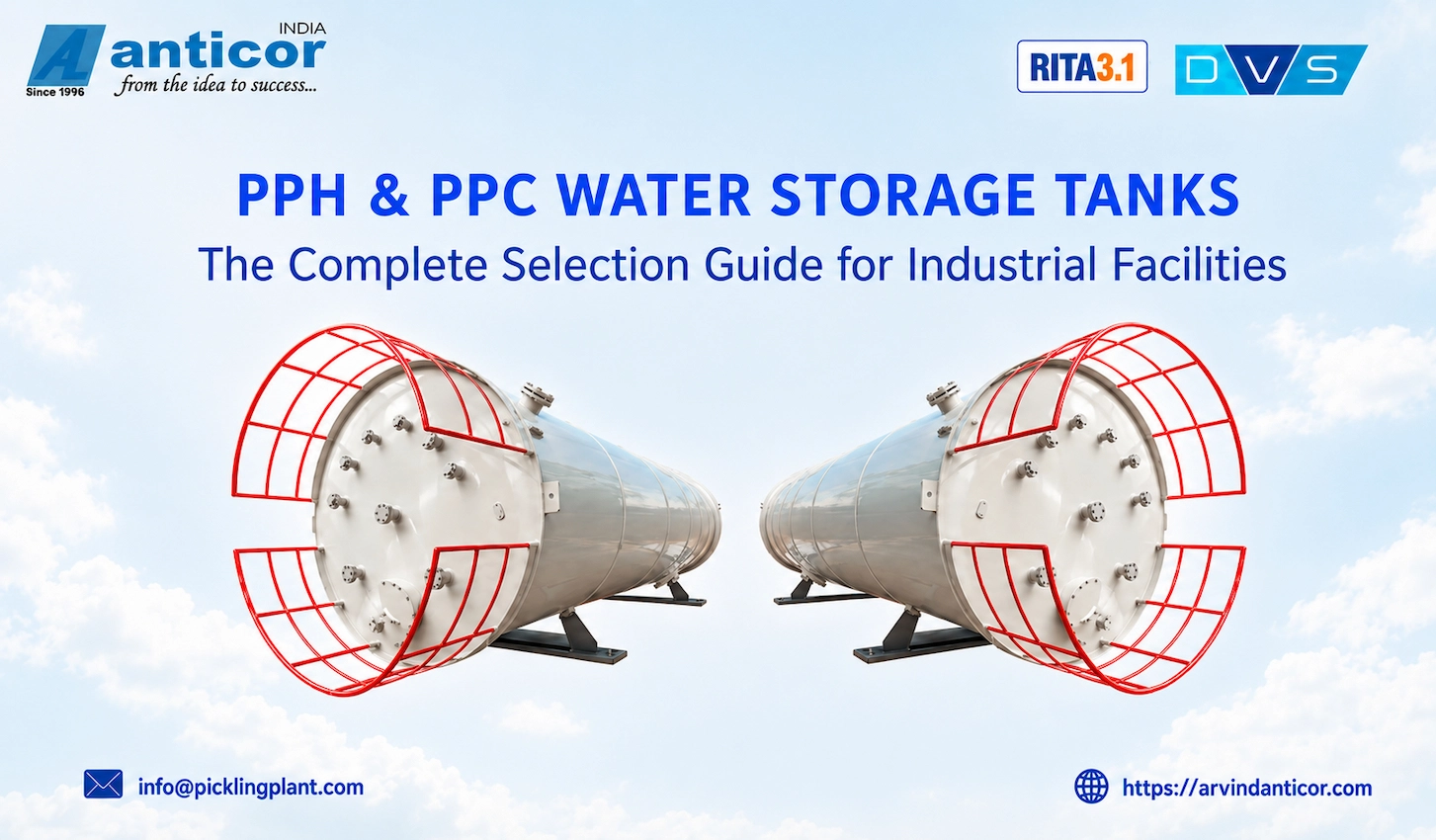
There’s more to picking a water storage tank than working out how many litres you need. The material it’s made from, how it’s built, what it’ll be exposed to, and where it’s going all shape how well it holds up once it’s in service.
PPH and PPC tanks turn up across a lot of industrial settings for exactly this reason — they’re corrosion-resistant and dependable in a way plain metal often isn’t. Both come from polypropylene, but that doesn’t mean they behave the same way. Knowing where they differ is what actually helps you pick the right one for your site.
In this guide, we’ll get into what separates PPH from PPC, which specs are worth your attention before signing off on a purchase, and what to think through when you’re choosing a tank for your facility.
What Are PPH and PPC Water Storage Tanks?
Both PPH and PPC tanks come from polypropylene — a thermoplastic that’s become a go-to in industrial settings largely because it doesn’t corrode. They’re related materials, sitting under the same polymer family, but the way they’re structured gives each one a distinct set of mechanical and thermal traits.
PPH Water Storage Tanks
PPH stands for Polypropylene Homopolymer. It’s on the rigid side, handles heat reasonably well, and stands up to a broad range of chemicals. Those traits are exactly why it tends to get picked for tanks that sit in one spot and need to hold their shape over time.
So if chemical resistance, heat tolerance, and rigidity are near the top of your list, a PPH water storage tank is probably worth a serious look.
PPC Water Storage Tanks
PPC — Polypropylene Copolymer — gives up a bit of rigidity in exchange for flexibility and better impact resistance. That trade-off pays off in situations where a tank might get knocked around, handled often, or exposed to vibration during regular use.
Either way, you’re getting real advantages over a conventional metal tank: no rust to deal with, lower maintenance overall, and because these tanks weigh less, they’re easier to move and install in the first place.
Key Specifications to Look for in PPH & PPC Water Storage Tanks
Most buyers start by comparing prices and capacity. Fair enough — but those two numbers won’t tell you much about how the tank holds five or ten years from now. That comes down to material quality, welding, wall construction, design, and how well the tank matches the conditions it’ll actually be working in.
Here’s what’s worth digging into before you settle on a supplier.
1. Material Quality
Not all polypropylene is the same stuff, and the grade that goes into fabrication has a real effect on how long the tank lasts.
Arvind Anticor works with 30 mm Polypropylene-H sourced from Röchling/Simona for its tank builds. Going with branded, certified raw material means you actually know what you’re getting — unlike an unspecified generic polypropylene, where quality can vary a lot more than buyers expect.
2. Tank Capacity
The capacity you need comes down to a handful of things: daily water use at your facility, how much buffer you want for peak demand, available space, and your operating schedule.
Arvind Anticor’s PPH and PPC tanks run from 5000 liters up to 50,000 liters and can be customized further depending on the project.
Bigger isn’t automatically better here. Go too small and you’re refilling constantly; go too big, and you’re paying for capacity — and floor space — you’ll probably never use.
3. Temperature Resistance
Worth checking this one against your actual application rather than taking it for granted.
The tanks referenced here are built to run efficiently between 0°C and 80°C. That said, what’s suitable for your installation depends on the material, what you’re storing, and the tank’s construction — not just the material category on its own.
If you’re working at the higher end of that range, confirm that the material and design can genuinely handle it before you commit to a purchase.
4. Welding Quality
This is one spec that genuinely makes or breaks how reliable a fabricated polypropylene tank turns out to be.
Arvind Anticor fabricates using Butt Fusion Welding and Extrusion Welding, following DVS Technical Codes 2205 and 2207. These are German technical standards for thermoplastic welding, and they exist specifically to produce strong, reliable joints.
When you’re comparing suppliers, it’s worth asking directly about welding methods and standards rather than just eyeballing the finished tank — you can’t always tell weld quality from the outside.
5. Corrosion and UV Resistance
Corrosion resistance is more or less built into polypropylene as a material, which is a big reason it’s replaced metal in so many storage setups.
For anything going outdoors, though, UV resistance needs its own attention. Sun exposure adds over months and years, and untreated plastic doesn’t age well under it — so the construction needs to actually account for the environment it’s headed to.
6. Leak-Proof Construction
A tank being leak-proof isn’t down to the material alone. Welding quality, wall thickness, how accurately it’s fabricated, and general build quality all play a part.
That’s really the reason to ask how a tank is put together, rather than assuming two tanks made from the same material will perform identically.
7. Manufacturing Standards
ISO certification is a decent signal that a supplier follows defined quality procedures consistently, rather than working case-by-case.
Still, it’s worth looking past the certificate itself — how they source materials, fabricate, weld, inspect, and control quality throughout the process matters just as much.
8. Tank Design
Vertical versus horizontal usually comes down to what space you’ve actually got.
Vertical tanks make sense when floor space is tight; horizontal ones tend to work better where ceiling height is the constraint, or where the tank needs to sit on a raised platform.
The interior surface matters too — smooth inner walls make cleaning noticeably easier and help cut down on residue building over time.
PPH vs PPC Water Tanks: How to Choose
This decision usually comes down to one thing: what’s the tank actually going to deal with day to day?
| Factor | PPH Tank | PPC Tank |
| Rigidity | Higher | Moderate |
| Impact resistance | Moderate | Higher |
| Temperature tolerance | Higher | Slightly lower |
| Flexibility | Lower | Higher |
| Best suited for | Static storage and higher-temperature applications | Applications involving mechanical stress or vibration |
If rigidity, chemical resistance, and temperature tolerance top your priority list, PPH water storage tanks tend to be the stronger fit.
If your installation involves more handling, physical stress, or vibration, the extra flexibility and impact resistance in PPC water storage tanks usually pays off.
There’s no single material that’s right across the board. What matters is the liquid you’re storing, the temperature it runs at, how it’ll be installed, the capacity you need, and the mechanical demands of the site-all of that should factor into the decision.
For a deeper look at how the two materials compare, see our guide on PPH vs PPC storage tanks.
How to Choose a Water Storage Tank for Your Facility
Material is only one part of this. Before placing an order, it’s worth working through a few more practical questions.
1. Determine the Required Capacity
Start with daily water use and how long that water needs to be stored for. Factor in peak demand, production schedules, and the chance of supply interruptions along the way.
Go too small and you’ll be refilling constantly, with real operational limits. Go too big and you’ve spent more than you needed to, on space you didn’t need either.
2. Consider Available Installation Space
Measure the site before deciding on tank configuration — not after.
A vertical tank makes sense where floor space is limited. Horizontal works better when height is the main constraint. Either way, leave room around the tank for installation, inspection, cleaning, and maintenance access.
3. Evaluate Operating Temperature
Check what temperature you’re actually operating against the tank’s rated range.
If you’re running hot, confirm the material and construction can genuinely handle it — don’t just assume any polypropylene tank will perform the same way regardless of grade or build.
4. Consider Indoor or Outdoor Installation
Where the tank sits changes what specs you actually need.
Outdoors, UV resistance stops being optional. Constant sun exposure over time affects plastic that wasn’t built with that environment in mind.
5. Check Fittings and Accessories
The tank shell is just one part of the full system.
Before fabrication starts, nail down what you need in terms of nozzles, manways, level indicators, inlets, outlets, and anything else. Also confirm what’s standard versus what has to be specified separately — sorting this out early avoids costly changes later.
6. Evaluate Fabrication and Welding
Two tanks built from the same base material can still perform very differently depending on how they’re fabricated.
Ask your supplier about raw material grade, wall construction, welding method, the standards they’re following, and their quality-control process before making a final call.
Applications of PPH & PPC Water Storage Tanks
PPH and PPC tanks show up across a range of industrial environments where corrosion resistance and reliable storage matter:
- Water treatment plants, for process and treated water storage
- Chemical processing facilities, where material compatibility and corrosion resistance are essential. For facilities handling corrosive chemicals, understanding chemical storage tank requirements can also help when evaluating the overall storage system.
- Energy sector operations that need large-capacity, reliable storage
- Manufacturing facilities with general industrial water storage needs
- Industrial utility systems, where corrosion resistance is preferred over conventional metal tanks
Which material and configuration actually fits depends on what’s being stored, the operating temperature, required capacity, and how the installation is set up.
Installation and Maintenance Tips
One of the genuine upsides of polypropylene tanks is that they don’t demand much once installed — especially compared to metal. That said, proper installation and regular checks still matter.
A handful of simple habits go a long way:
- Clean on a set schedule. Smooth interior walls make cleaning easier, but sediment can still build up over time without regular cleaning.
- Inspect fittings, nozzles, and seals. Early detection of wear can reduce the risk of leaks and more expensive repairs later.
- Check manways and access points. Confirm that seals remain intact and access points stay secure.
- Conduct periodic visual inspections. Look for signs of deformation, discoloration, cracking, or other visible damage.
- Ensure proper foundation preparation. An uneven or unsuitable base can create long-term structural stress that is difficult to correct after installation.
Unlike steel, polypropylene doesn’t need routine rust treatment — which is a big part of why the maintenance load stays lower over the tank’s working life.
Conclusion
Getting the right water storage tank starts with understanding what your facility actually needs. PPH and PPC each bring different strengths to the table, so operating conditions, installation environment, capacity, and application type should all factor into the final call.
At Arvind Anticor, we design and manufacture PPH and PPC water storage tanks for a range of industrial applications. Whether you’re setting up something new or replacing an existing system, our team can help you land on a solution that actually fits what you need.
FAQs
What is the difference between a PPH and PPC water storage tank? PPH tanks are more rigid, with better temperature and chemical resistance — a strong fit for static, higher-temperature storage. PPC tanks flex more and handle impact better, making them the better choice where the tank will face mechanical stress or vibration.
What size water storage tank do I need?
That depends on your daily water use, peak demand, and how much buffer you want built in. Arvind Anticor’s PPH and PPC tanks range from 5000 liters to 50,000 liters, with further customization available.
Are PPH and PPC water storage tanks suitable for outdoor installation? Yes — both materials resist corrosion and can be built with UV-resistant properties suited to long-term outdoor use. Periodic inspection is still a good idea to confirm everything’s holding up as expected.
What welding standard should a quality water storage tank meet? Look for Butt Fusion Welding and Extrusion Welding done to DVS Technical Codes 2205 and 2207 — a recognized standard for producing strong, leak-resistant joints.
How much maintenance do PPH/PPC water storage tanks require? Less than metal tanks, generally, since there’s no rust to manage. Routine cleaning and periodic checks on fittings, manways, and the overall structure are still worth doing to keep performance consistent over time.
Let’s Connect
Contact Us
We are live 24/7 and reply within 48 hours.
Get in Touch
-
-
-
Address
Survey No.584/1+2 – C,Nr. Akshar Industrial Estate Mahemdabad Highway Road,Vatva Ahmedabad-382445, Gujarat, India.