

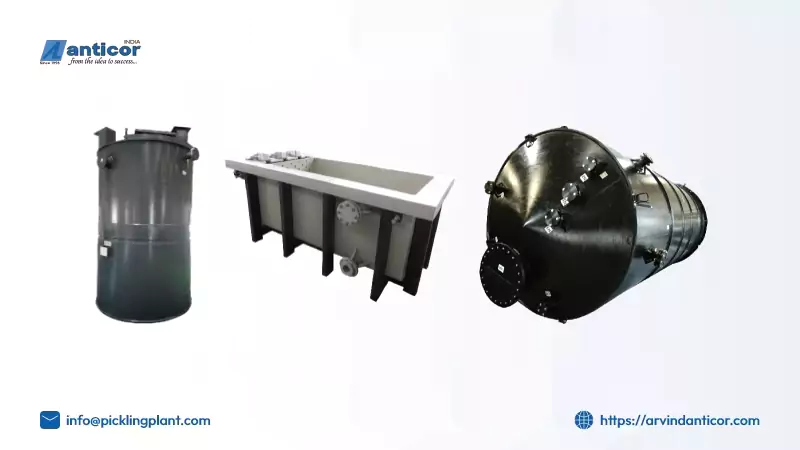
Chemical storage tanks are for storing different types of chemicals. In a factory, a chemical storage tank can be used to store various kinds of chemicals used in the manufacturing process, such as These tanks can be used to store liquids, solids, or gases.
These tanks are used to protect the contents from environmental factors and to prevent damage caused by accidents. They are also important because they can protect people and property from dangerous chemicals.
Why use a chemical storage tank?
Chemical storage tanks are designed to provide controlled, secure containment of industrial chemicals under defined operating conditions. They are engineered to withstand chemical exposure, internal pressure variations, and environmental stress while enabling safe dispensing and handling.
Across industries such as food processing, pharmaceuticals, oil refining, and chemical manufacturing, properly designed chemical storage tanks support operational safety, regulatory compliance, and long-term structural reliability.
Key Advantages of Industrial Chemical Storage Tanks
| Feature | Industrial Benefit | Operational Impact |
| Corrosion-Resistant Materials (HDPE, PP, FRP) | Prevents chemical attack and structural degradation | Extends service life up to 15–20 years |
| Chemical Compatibility Design | Ensures safe storage of acids, alkalis, and reactive chemicals | Minimizes leakage and environmental hazards |
| Seamless / Butt-Fusion Welded Construction | Eliminates weak joints and potential crack points | Enhances structural integrity and safety |
| Integrated Venting & Pressure Control | Prevents internal pressure buildup and vapor accumulation | Improves operational safety and compliance |
| UV-Stabilized Outdoor Design | Protects tank body from sunlight degradation | Suitable for long-term outdoor installations |
| Custom Nozzles & Fittings | Enables controlled filling, discharge, and overflow management | Improves operational efficiency |
| Lightweight Construction | Easier handling and installation compared to steel | Reduces transportation and installation costs |
| Low Maintenance Structure | Resistant to rust, scaling, and chemical residue buildup | Lowers long-term maintenance expenses |
| Drainage & Sloped Bottom Options | Allows complete chemical discharge | Simplifies cleaning and inspection processes |
What is a chemical storage tank made of?
The tanks can be made of different materials, such as stainless steel, fiberglass, carbon fiber, or polyvinyl chloride (PVC). They are used for storing chemicals that are too reactive or too unstable to be stored in any other way. But the most common is steel because it is strong, durable, and has low reactivity.
There are myriad chemical storage tanks manufacturers in India, and Arvind Anticor is one of the leading custom Co2 storage tank suppliers. We build tanks for any specification in a record time. Our manufacturing unit produces chemical storage tanks like HDPE (High-density polyethylene) and HCL (Hydrochloric Acid) chemical storage tanks, meeting the industry standard with unparalleled quality. Not only manufacturers but chemical storage tanks come in a wide range.
What are the different types of Chemical storage tanks?
1. Acid Storage Tanks
In many instances, acidic materials must be conveyed to different facilities or stored in large volumes in industrial settings due to their widespread use in numerous industries. Acid storage tank is a vessel made of corrosion-resistant metal or polyethylene, which allows for the secure retention and storage of these substances as well as their transport over great distances. Arvind Anticor is an acid storage tank manufacturer that offers containers with metal structures to increase the durability and effectiveness of its products.
On the basis of their general shape, acid storage containers can be categorized as follows:
Horizontal acid storage reservoir
Vertical acid storage container
Funnel acid storage vessel
Cubic acid storage container
Each of the aforementioned models varies greatly in terms of capacity and capacity.
2. Polypropylene Tanks
Due to the rigidity and relative affordability of polypropylene, it is used to contain compounds. Its chemical resistance and weldability make it an ideal material for industrial applications. Polypropylene tanks are ideal for chemical storage, sheets, pipelines, and Returnable Transport Packaging (RTP) due to its high tensile strength and resistance to high temperatures and chemicals. In comparison to many other materials, the tensile strength of polypropylene structure is approximately 4,800 psi. This enables the lightweight material to withstand relatively hefty burdens.
3. Thermoplastics Chemical Storage Tanks
In the chemical industry, thermoplastics chemical storage tanks are used for containment and piping because they are not only resistant to chemicals but can also function at high temperatures. Thermoplastic Storage Tanks produce a smaller carbon footprint than alternative tank technologies. And at the end of their useful lives, the thermoplastics we use can be completely recycled and reground into granules for use in the production of industrial piping with minimal pressure.
4. FRP Chemical Storage Tanks
FRP chemical storage tanks are resistant to corrosion. However, corrosion occurs when the reservoir retains water for an extended period of time. Maintenance and replacement costs are cut in half in comparison to concrete containers. Heavy containers necessitate costly installation fees. When items are lightweight, such as FRP chemical storage tanks, implementation is very inexpensive. As a manufacturer of FRP chemical storage tanks, we produce both FRP tanks and FRP tank vessels. The products of Arvind Anticor are customer-focused and suitable for industrial and commercial water treatment facilities. Our product is made from fiber-reinforced plastic, making it lightweight, corrosion-resistant, and durable.
5. Customized Chemical Storage Tanks
We are one of the top manufacturers and distributors of different chemical storage tank types, which are used to store various liquids and chemicals. These containers are known for being leak-proof, resistant to corrosion, and low maintenance. We also offer customized chemical storage tanks in varied shapes and sizes, as per our clients’ requirements. We render comprehensive types of chemical storage tanks solutions to clients in a variety of industries. Chemical, food & beverage, oil refining, and pharmaceutical industries can utilize our chemical storage containers.
Arvind Anticor manufactures all chemical storage containers according to the industry standard.
Industry Applications of Chemical Storage Tanks
The design and configuration of chemical storage tanks vary depending on the industry and operating conditions. Differences in chemical composition, temperature exposure, regulatory requirements, and process intensity determine the appropriate tank material and structural design.
In metal processing and surface treatment, tanks are commonly used for hydrochloric acid (HCl), sulfuric acid, nitric acid, and pickling solutions. These applications demand high corrosion resistance and structural reliability under continuous exposure.
Within pharmaceutical and chemical manufacturing, storage tanks handle solvents, alkalis, and intermediate process liquids. Here, chemical compatibility, fabrication quality, and leak-proof construction are critical to maintaining product integrity and operational safety.
In the oil refining and petrochemical sector, tanks are used for process chemicals, additives, and cleaning agents. Large capacity storage and resistance to environmental exposure are key performance considerations.
Water and wastewater treatment facilities require tanks capable of storing sodium hydroxide, chlorine solutions, coagulants, and neutralizing agents. Material stability against both alkaline and acidic chemicals is essential.
In the food and beverage industry, storage tanks are typically used for cleaning chemicals, sanitizing agents, and certain process liquids. Material selection must align with hygiene and safety compliance standards to ensure operational reliability.
Common Causes of Chemical Storage Tank Failure
Most storage tank failures occur due to operational or selection errors rather than inherent material limitations.
Common causes include:
- Incorrect material compatibility
- Exposure beyond temperature design limits
- Inadequate installation or foundation support
- Fabrication inconsistencies or weld seam defects
- Lack of routine inspection and preventive monitoring
Addressing these risks during design and installation significantly reduces long-term safety concerns.
Design Considerations for Long-Term Performance
Long-term reliability of chemical storage tanks depends on engineering details that go beyond basic containment.
Important design considerations include:
- Proper wall thickness based on chemical load and tank height
- Reinforcement design for higher storage capacities
- Strategic nozzle placement and load distribution
- Venting and pressure management provisions
- Compatibility with secondary containment systems
Attention to these factors supports operational stability and extended service life.
How to choose a chemical storage tank?
Although the water tank can store some chemicals for some time, it is not particularly capable to hold these chemicals, which can cause the tank to degrade and leak and may result in grave dangers. Because a range of commitments and responsibilities accompany the storage of several types of products.
That is why in the case of chemical storage tanks, any loss or system failure can put human or environmental health at stake, increasing hazards, liabilities, and financial losses. Down the line, it impacts the future viability of your business.
Hence, make sure to keep the following factors in mind while selecting a chemical storage tank.
Safety, Health, and Environment Regulations;
Product requirements and registration;
Construction and maintenance;
Quality;
Type of chemical you will be storing and the material suitable for the same.
Chemical Storage Tank Maintenance and Lifecycle Management
Choosing the right chemical storage tank is only the beginning. To ensure long-term performance, safety, and compliance, regular maintenance and lifecycle management are essential. A well-maintained chemical storage tank not only prevents accidents but also maximizes return on investment by extending its usable life.
Best Practices for Chemical Storage Tank Maintenance:
Regular Inspections: Check for cracks, corrosion, leaks, and structural integrity to detect early signs of wear.
Cleaning and Decontamination: Prevent chemical residue buildup that can compromise tank performance or contaminate stored substances.
Safety Monitoring Systems: Equip tanks with level sensors, pressure relief valves, and leak detectors to maintain safe operations.
Repairs and Upgrades: Replace or reinforce fittings, linings, and nozzles as needed to keep tanks in optimal condition.
Lifecycle Planning: Evaluate recyclability or safe disposal options at the end of the tank’s service life, especially for thermoplastics and FRP tanks.
Maintenance Considerations by Tank Type:
Acid Storage Tanks: Require frequent checks for corrosion, especially at joints and fittings exposed to aggressive acids.
Polypropylene Tanks: Weld seams should be inspected for stress cracks; cleaning schedules prevent buildup of chemical residues.
Thermoplastic Tanks: Though recyclable, they can be sensitive to prolonged high temperatures, monitor for warping or brittleness.
FRP Tanks: Lightweight and durable but prone to degradation if water stagnates; regular draining and inspection help extend life.
Customized Tanks: Maintenance varies by design: nozzles, baffles, or heat panels should be inspected according to application.
By aligning preventive maintenance with the specific type of chemical storage tank, industries can achieve 15–20 years of reliable performance, improved safety, and significant cost savings.
Wrapping up…
So, now that you know why a chemical storage tank is necessary, be sure to get one for your manufacturing unit or factory from a reliable chemical storage tank supplier or manufacturer like Arvind Anticor. Our chemical storage tanks are Corrosion and Heat resistant, Flame retardant with a high strength-to-weight ratio.
We can also help you with custom fittings for all chemical holding tanks, for example, flanged nozzles, threaded couplings, heat panel systems, viewports, internal baffles, and more. In addition to that, on-site installation, maintenance, repair, and modification will also be on us!
For any query or discussion, feel free to connect us.
Let’s Connect
Contact Us
We are live 24/7 and reply within 48 hours.
Get in Touch
-
-
-
Address
Survey No.584/1+2 – C,Nr. Akshar Industrial Estate Mahemdabad Highway Road,Vatva Ahmedabad-382445, Gujarat, India.